

Best Leaf Blowers For Labor Day 2026
🏆 Top Picks at a Glance
 #1
Best Overall
FAOGO Cordless Leaf Blower, 680 CFM High Power Battery Powered Leaf Blower with 2 Batteries & Charger, 5-Speed Variable Control, Lightweight Handheld Design for Yard Driveway Patio Lawn Care (Gray)
$79.99
Check Price →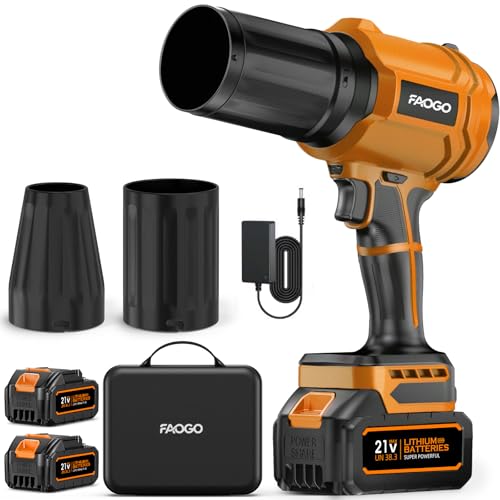 #2
Runner Up
FAOGO Cordless Leaf Blower with 2 Batteries & Charger - 990,000 RPM Electric Handheld Blower, Lightweight for Lawn, Yard, Patio, Garden Care - Orange
$59.98
Check Price → #3
Best Value
Electric Leaf Blower Cordless with Battery and Charger for Lawn Care Small
$49.98
Check Price →This research covers small patios, suburban lawns, and large properties; a big RPM number alone does not make a blower a dependable tool. One mature shade tree can produce roughly 100 pounds of leaves in a season, so runtime, sustained cutting power, weight, and repair support matter more than flashy marketplace copy. According to This Old House’s comparisons, a corded blower is listed at 600 CFM and 6.4 pounds, a 20V model at 450 CFM with a 15–20-minute maximum runtime, and a 40V model at about 3.3 pounds with a 15-minute runtime. This guide separates practical yard equipment from one-season gambles, explains which tools suit each property, and flags where missing specs, weak warranties, or awkward maintenance should make you think twice.
⚡ Quick Answer: Best Leaf Blowers
Best for Large Yards: FAOGO Cordless Leaf Blower, 680 CFM High Power Battery Powered Leaf Blower with 2 Batteries & Charger, 5-Speed Variable Control, Lightweight Handheld Design for Yard Driveway Patio Lawn Care (Gray)
$79.99 — Check price on Amazon →
Table of Contents
Affiliate Disclosure: We may earn a commission from qualifying purchases made through links on this page. This research-based comparison summarizes published specifications and source guidance from sources including This Old House and Consumer Guides Reviews; it does not present hands-on test results.
Main Points
- Match power to the property instead of chasing the biggest number. Roger Cook of This Old House recommends using only as much power as the yard requires, while Ward Dilmore notes that CFM and MPH can be marketing details for routine work; extra power becomes valuable when moving wet leaves, gravel, or stone dust. The BLACK+DECKER LB700’s listed 180 CFM and 180 MPH can suit light residential cleanup, while the higher-output FAOGO listings should be evaluated using verified runtime and sustained airflow rather than treated as workhorses.
- Demand a real runtime figure from every cordless blower. A published 20V profile reports a 15–20-minute maximum runtime, and a published 40V profile reports 15 minutes; “two batteries included” on the FAOGO, 21V, and other generic listings does not automatically mean twice the working time. Matching a cordless blower to a battery platform you already own can also save more money than buying a bundle with short-lived proprietary packs.
- Weight and balance determine whether you finish the job comfortably. A published 40V profile lists approximately 3.3 pounds, a published 20V profile lists 5.4 pounds, and another cordless-blower profile lists 6.4 pounds, while an 8.8-pound backpack model is described as adding cruise control and adjustable shoulder straps for longer work. For a larger property, a padded backpack can reduce arm fatigue; for steps, decks, and quick touch-ups, a genuinely light handheld is easier to grab and use.
- Look for variable speed, a safe intake, and the right nozzle—not just maximum airflow. This Old House recommends a bottom air intake over a side intake that could pull in clothing, variable-speed control near flower beds, rounded nozzles for loose leaves, and flat nozzles for dirt or wet leaves. Noise matters too: a published cordless-blower profile reports 53 decibels, while some local rules may require blower noise below 65 decibels, so hearing protection and neighborhood limits should be part of the decision.
- Treat unsupported specifications as a durability warning. Listings claiming 990,000 RPM and 1,100,000 RPM do not tell you how long the motor runs, whether batteries hold a charge, or whether replacement parts exist; any model with no clear warranty, runtime, or service path is a one-season risk. Even established coverage can conflict—This Old House lists different figures for one established cordless model in its table and profile—and Consumer Guides Reviews identifies its battery-blower article as research-based rather than a hands-on lab test, so verify critical numbers before buying; the John Deere toy belongs in the pretend-play category, not the yard-tool comparison.
Our Top Picks
Affiliate disclosure: if you buy through these links, we may earn a commission at no extra cost to you.
Factors to Consider
Frequently Asked Questions
What is the best type of leaf blower for a small yard?
For a small lawn or townhouse, a light variable-speed handheld usually beats a backpack because you can finish before fatigue sets in. Greenworks weighs about 3.3 pounds and is rated at 53 decibels, but its 135 CFM and 15-minute runtime make it a short-session cleanup tool rather than a choice for a large, leaf-heavy property.
Is CFM or MPH more important in a leaf blower?
CFM controls how much leaf volume you move, while MPH helps break loose wet leaves, grit, and packed debris; you need both numbers in context. For routine residential work, Ward Dilmore says the figures can be marketing details, but extra power pays off on wet leaves or gravel, where a rounded nozzle and high CFM alone may not be enough.
How long do cordless leaf blowers run on one battery?
The DEWALT 20V profile reports a 15–20-minute maximum runtime, and the Greenworks 40V profile reports 15 minutes. Full-trigger use, wet debris, cold weather, and an aging battery can shorten that, so measure the job rather than assuming the marketing maximum covers the whole yard.
Are backpack leaf blowers worth the extra weight?
They are worth considering when you have several trees, long paths, or wet leaves that keep a handheld at full trigger, because distributing weight across your shoulders is less tiring. The Poulan Pro is listed at 8.8 pounds with 475 CFM, 200 MPH, cruise control, and adjustable shoulder straps; for smaller properties, a padded compact backpack may be more comfortable, but a handheld is easier to grab and store.
Is a corded leaf blower better than a cordless model?
Choose corded when you have an outdoor outlet, do not want battery downtime, and can work safely around the cable; the WORX is listed at 6.4 pounds, 600 CFM, and 110 MPH with a three-year warranty. Choose cordless for stairs, driveways, and scattered cleanup where cable management is more aggravating than a 15–20-minute battery limit.
What leaf-blower noise level is acceptable in a neighborhood?
There is no universal limit, so check local rules before Labor Day cleanup: This Old House notes some ordinances may restrict blower noise below 65 decibels. As a comparison point, the Greenworks 40V profile reports 53 decibels, but wear hearing protection for sustained use and avoid assuming a quieter rating means enough power for wet leaves.
How can I avoid buying a leaf blower that dies after one season?
Look past peak MPH and ask whether the battery, charger, trigger, intake housing, and replacement parts are supported; a cheap blower that quits after one season is not a bargain. Consumer Guides Reviews identifies its battery-blower article as a research-based guide rather than a hands-on lab test, so use warranty as one safety net—four years for Greenworks, three for WORX and DEWALT, and two for Poulan Pro—then keep the intake clean and store the machine correctly.
Conclusion
Affiliate disclosure: This site may earn a commission from qualifying purchases made through links on this page, at no extra cost to you.
Based on published manufacturer specifications and retailer listings reviewed for this research-based roundup, most homeowners should look for a variable-speed cordless handheld model that works with a battery platform they already own. A 5.4-pound model rated at 450 CFM and 125 MPH offers a practical balance, while a lighter, quieter option may suit short cleanups. For uninterrupted runtime, a corded model rated at 600 CFM with a three-year warranty may be worth considering, and larger or wetter properties may justify a backpack design. Verify conflicting specifications in the current listing, and do not trade away durability for a Labor Day sticker price.


